

Top 30 Garden Hoes
Hello Readers,
Welcome to our definitive guide for gardeners seeking the ultimate weeding, cultivating, and planting companion! If you’re passionate about keeping your garden pristine, you know that the right tools make all the difference. In 2026, advancements in ergonomic design and material science continue to bring forth truly exceptional garden tools, and hoes are no exception. We’ve meticulously researched and compiled a list of the top 30 garden hoes available, ensuring you can find the perfect implement for every task, whether you’re tackling stubborn weeds or preparing new beds.
1. The Classic Draw Hoe

The draw hoe, also known as an American or Warren hoe, is a fundamental tool for many gardeners. Its heavy, broad blade is designed for powerful pulling action, making it ideal for moving soil, creating furrows for planting, and aggressively chopping through tough weeds. This traditional design provides excellent leverage for breaking up compacted earth.
When selecting a draw hoe for 2026, look for durable carbon steel blades that hold a sharp edge and a strong, comfortably long handle. It’s a versatile workhorse, perfect for gardeners who need a robust tool for various tasks, from deep cultivation to shaping garden beds with precision.
| Feature | Description |
|---|---|
| Primary Use | Moving soil, creating furrows, heavy weeding |
| Blade Type | Heavy, broad, angled |
| Best For | Aggressive cultivation, new garden prep |
2. The Agile Dutch Hoe

The Dutch hoe stands apart with its unique push-pull action, designed to slice weeds just below the soil surface while you remain upright. Its flat, sharp blade is parallel to the ground, making it incredibly effective for light weeding in established beds without disturbing plant roots too deeply. This design helps maintain soil structure and reduces fatigue.
For optimal performance in 2026, choose a Dutch hoe with a razor-sharp, heat-treated stainless steel blade that resists rust and maintains its edge. This tool is a favorite among those who prefer to keep their gardens tidy with minimal effort, making quick work of young weeds before they become entrenched.
| Feature | Description |
|---|---|
| Primary Use | Light weeding, surface cultivation |
| Blade Type | Flat, sharp, parallel to ground |
| Best For | Established beds, minimal soil disturbance |
3. The Oscillating Hoe (Action Hoe)
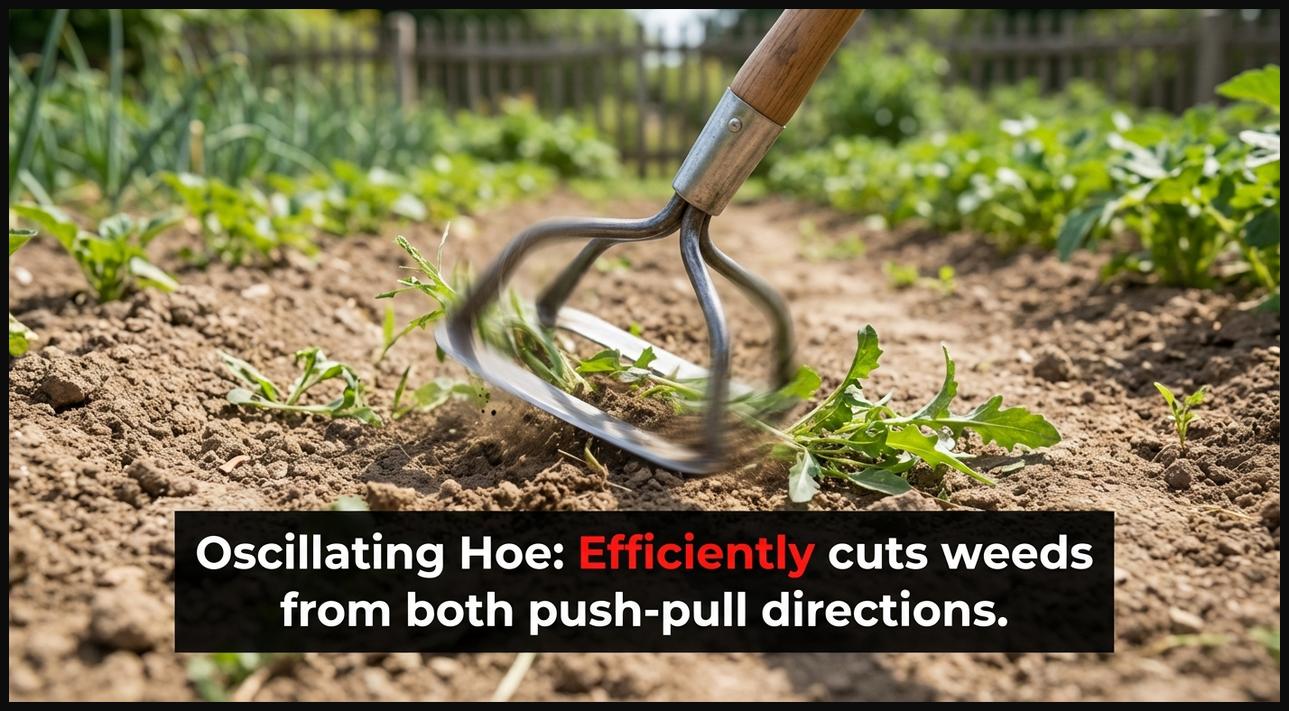
Also known as a stirrup hoe or scuffle hoe, the oscillating hoe features a double-edged blade that pivots as you push and pull, cutting weeds from both directions just beneath the soil line. This continuous motion makes it remarkably efficient for clearing large areas of shallow-rooted weeds quickly and with less strain on your back. It is truly one of the best garden hoes for speed.
The articulating head is the key to its effectiveness, allowing the blade to maintain the optimal angle. When choosing one in 2026, look for models with self-sharpening blades and robust pivot mechanisms for lasting durability. It’s an indispensable tool for maintaining paths and vegetable gardens.
| Feature | Description |
|---|---|
| Primary Use | Efficient shallow weeding, cultivating |
| Blade Type | Double-edged, pivoting stirrup |
| Best For | Large areas, paths, established rows |
4. The Japanese Weeding Hoe (Hor-Hor)
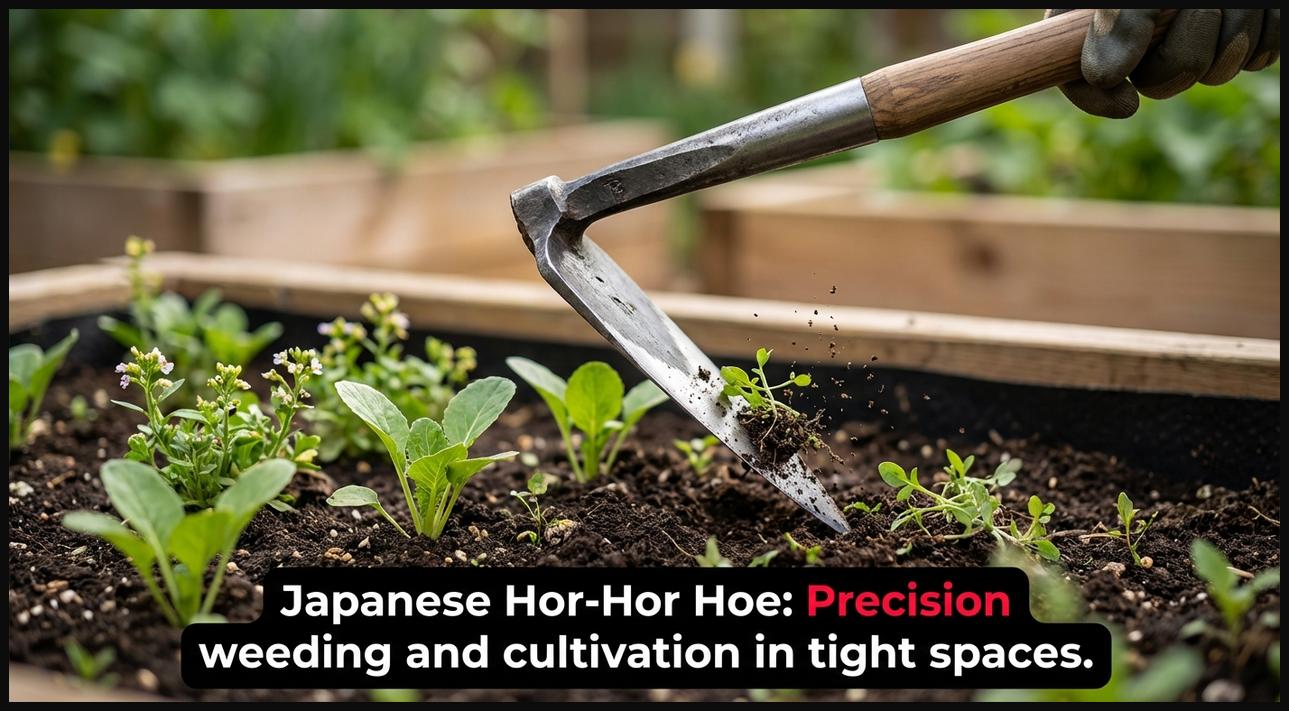
The Japanese weeding hoe, often called a Hor-Hor or Nejiri Gama, is a marvel of simplicity and effectiveness. Its sharp, angled blade, usually made from high-carbon steel, is perfect for precision weeding, digging small holes, and cultivating around delicate plants. The design allows for intricate work in tight spaces where larger hoes might struggle.
This specific type of garden hoe is prized for its balance and cutting ability, making it a joy to use for detailed tasks. In 2026, many gardeners appreciate its traditional craftsmanship combined with modern ergonomic handles. It’s an excellent choice for raised beds and container gardens, offering unparalleled control.
| Feature | Description |
|---|---|
| Primary Use | Precision weeding, small digging, cultivating |
| Blade Type | Sharp, angled, often L-shaped |
| Best For | Raised beds, tight spaces, delicate plants |
5. The Warren Hoe (Triangle Hoe)
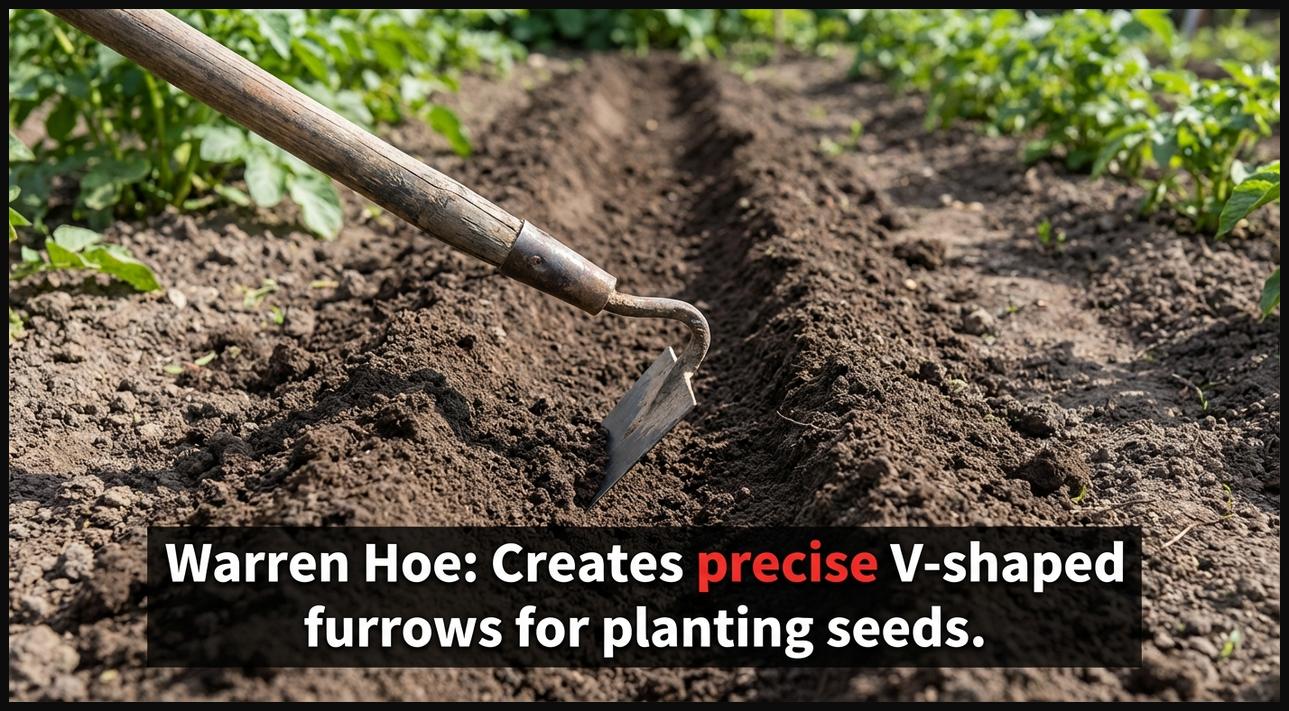
The Warren hoe, with its distinctive V-shaped or triangle blade, is exceptional for creating furrows for planting seeds and transplanting seedlings. The pointed tip allows for precise furrowing, while the angled sides can be used for drawing soil back over seeds or for light cultivation around plants. Its design helps to define rows cleanly.
This versatile hoe is particularly useful in vegetable gardens where neat rows and accurate planting depths are crucial for success. In 2026, models with reinforced blade-to-handle connections ensure longevity and withstand consistent use. It’s a fundamental tool for anyone focused on organized and productive planting.
| Feature | Description |
|---|---|
| Primary Use | Creating furrows, mounding, precise cultivation |
| Blade Type | V-shaped, pointed |
| Best For | Vegetable gardens, seeding, transplanting |
6. The Cultivator Hoe (Grubber Hoe)

A cultivator hoe, also known as a grubber hoe, features tines or prongs on one side and a traditional hoe blade on the other. This dual-purpose design makes it incredibly efficient for breaking up compacted soil, aerating beds, and incorporating compost, while the hoe side handles weeding and furrowing. It truly combines two essential tools in one.
This robust tool is perfect for preparing new garden areas or revitalizing old ones, offering deep soil penetration with less effort. When selecting a model in 2026, look for sturdy forged steel construction on both ends for maximum durability and effectiveness in challenging soil conditions. It’s a powerful ally for soil improvement.
| Feature | Description |
|---|---|
| Primary Use | Breaking compacted soil, aerating, weeding |
| Blade Type | Tines/prongs on one side, flat blade on other |
| Best For | Soil preparation, heavy cultivation |
7. The Onion Hoe
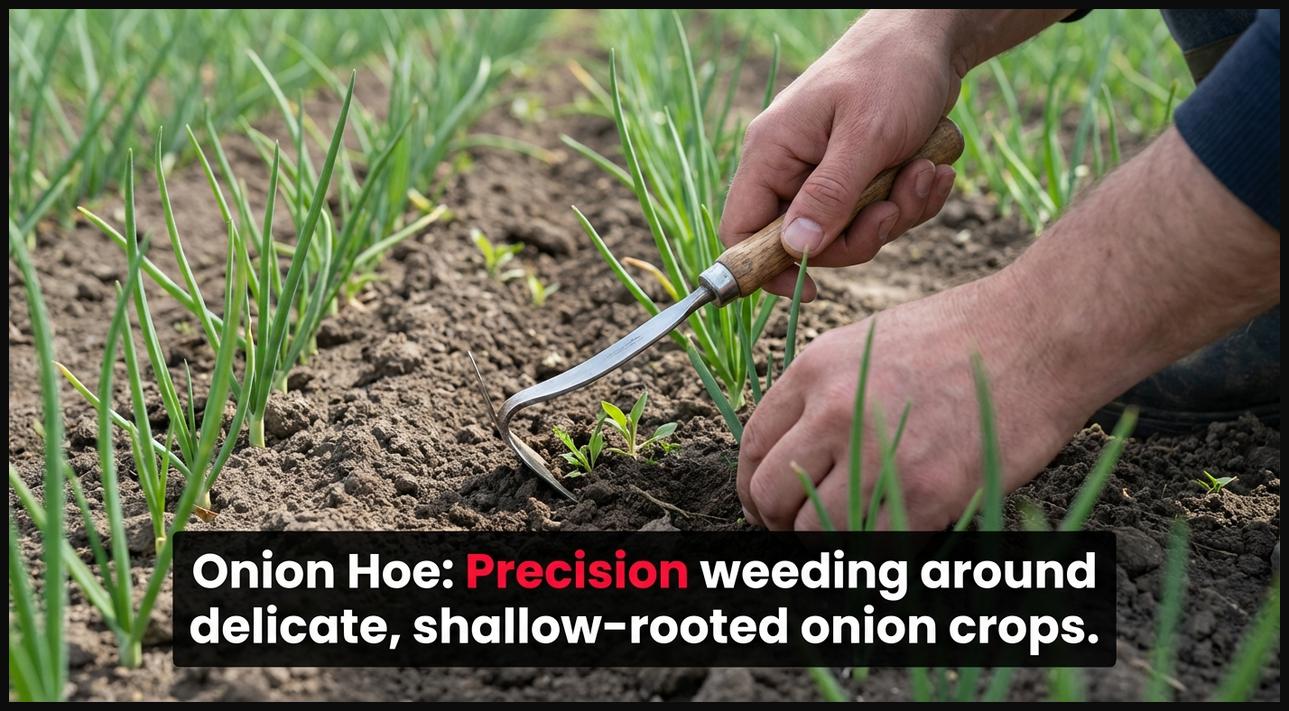
Specifically designed for the delicate task of weeding around shallow-rooted crops like onions, the onion hoe features a small, thin, and often slightly curved blade. Its compact size allows for meticulous work in tight spaces, minimizing the risk of disturbing the developing bulbs or roots of nearby plants. Precision is key with this specialized tool.
Gardeners who grow row crops will find this hoe indispensable for maintaining neat, weed-free lines without causing damage. In 2026, look for models with lightweight handles and blades crafted from high-carbon steel for superior sharpness and control. It’s a specialized addition to any serious vegetable gardener’s arsenal.
| Feature | Description |
|---|---|
| Primary Use | Precision weeding around shallow-rooted crops |
| Blade Type | Small, thin, often curved |
| Best For | Onions, carrots, small row crops |
8. The CobraHead Weeder and Cultivator

The CobraHead is a unique and highly versatile hand tool that functions like a mini-hoe, weeder, and cultivator all in one. Its distinct cobra-like head is designed to cut, dig, and loosen soil with minimal effort, making it excellent for working in tight spots, raised beds, or containers. This tool excels at precise weeding tasks.
This innovative design allows gardeners to effectively tackle tough weeds, prepare planting holes, and cultivate soil around existing plants with one fluid motion. In 2026, many gardeners praise its ergonomic handle and durable steel blade, making it a powerful extension of your hand for various gardening chores.
| Feature | Description |
|---|---|
| Primary Use | Weeding, cultivating, digging in tight spaces |
| Blade Type | Curved, pointed “cobra head” |
| Best For | Raised beds, containers, precision work |
9. The Swan Neck Hoe

Distinguished by its long, curved neck that elevates the blade above the handle, the swan neck hoe is designed to provide optimal leverage and reach for weeding in rows. This unique angle allows the gardener to pull weeds effectively while standing upright, reducing back strain and providing a clear view of the work area. It’s particularly good for working between established plants.
The extended neck ensures the blade can get deep into the soil where needed, without the handle obstructing your view. In 2026, these hoes are appreciated for their ergonomic advantages, especially for those with larger garden plots. Look for strong, lightweight construction for ease of use over extended periods.
| Feature | Description |
|---|---|
| Primary Use | Weeding in rows, reaching under plants |
| Blade Type | Standard hoe blade with long, curved neck |
| Best For | Row crops, gardeners seeking ergonomic comfort |
10. The Fork Hoe (Grubber with Tines)

The fork hoe, distinct from a cultivator hoe by primarily featuring robust tines, is designed for breaking up stubborn, compacted soil and digging out deep-rooted weeds. Its strong prongs penetrate hard ground with ease, making it perfect for preparing tough plots or aerating heavy clay soils. This tool is a brute-force solution for difficult ground.
While it excels at breaking up soil, some models also include a small cutting edge on one side of the tines for additional versatility in weeding. For 2026, seek models with heat-treated steel tines that can withstand significant leverage without bending. It’s an indispensable tool for initial garden bed preparation.
| Feature | Description |
|---|---|
| Primary Use | Breaking up compacted soil, digging deep weeds |
| Blade Type | Robust tines/prongs |
| Best For | Heavy soil, initial garden prep, tough weeds |
11. The Stirrup Hoe (Loop Hoe)
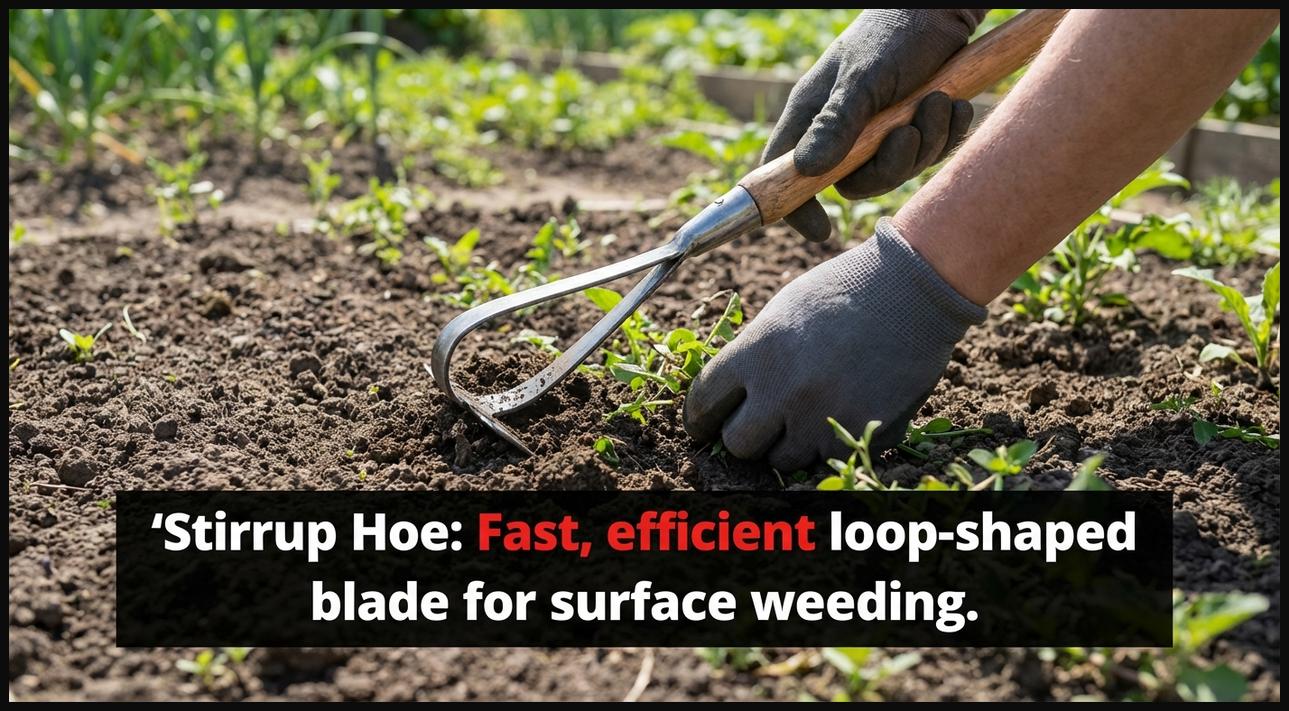
The stirrup hoe is another name for the oscillating hoe, highlighting its unique loop-shaped, double-edged blade. This design allows it to slice through weeds both on the push and pull stroke, making weeding remarkably fast and efficient. The blade pivots, staying at the ideal angle to cut weeds just below the soil surface without much effort.
This tool is a favorite for maintaining neat paths, vegetable rows, and flowerbeds by preventing weeds from establishing deep roots. In 2026, high-quality stirrup hoes feature durable, self-sharpening blades and comfortable, long handles that reduce back strain. It’s an essential tool for proactive weed management.
| Feature | Description |
|---|---|
| Primary Use | Fast, efficient surface weeding |
| Blade Type | Loop-shaped, double-edged, pivoting |
| Best For | Paths, rows, large areas of young weeds |
12. The Pick Hoe

A pick hoe combines a pickaxe on one side with a hoe blade on the other, creating a powerful digging and breaking tool. The pick end is excellent for breaking up rocky or compacted soil, while the hoe end can then be used to clear debris or shape beds. This heavy-duty tool is designed for challenging ground conditions.
This robust implement is especially useful for creating new garden beds in difficult terrain, tackling root-bound areas, or preparing ground for major planting projects. When investing in a pick hoe in 2026, prioritize models with strong, forged steel heads and securely fitted handles for safety and durability during demanding tasks.
| Feature | Description |
|---|---|
| Primary Use | Breaking hard soil, digging, clearing debris |
| Blade Type | Pickaxe on one side, hoe blade on other |
| Best For | Rocky soil, heavy digging, new bed creation |
13. The Nursery Hoe

The nursery hoe is characterized by its relatively small, rectangular blade, designed for precision weeding and cultivating in nurseries or closely planted areas. Its compact size allows for careful work around young plants without causing damage, making it invaluable for maintaining neat rows of delicate seedlings. This tool is all about control.
This specialized hoe is often found in commercial nurseries but is equally useful for home gardeners with dense plantings or small spaces. In 2026, many versions feature lightweight yet sturdy construction for prolonged use. It’s ideal for maintaining the health and vigor of young plants by eliminating competing weeds effectively.
| Feature | Description |
|---|---|
| Primary Use | Precision weeding in nurseries, tight spaces |
| Blade Type | Small, rectangular |
| Best For | Seedlings, closely planted areas, delicate plants |
14. The Grape Hoe

The grape hoe, sometimes referred to as a grub hoe or potato hoe, is a heavy-duty tool with a stout, often slightly curved blade. Originally designed for cultivating vineyards, it excels at digging trenches, mounding soil around plants, and removing tough, woody weeds. Its robust construction can handle demanding tasks.
This powerful hoe is fantastic for breaking new ground, moving significant amounts of soil, and tackling large-scale weeding jobs where other hoes might fail. In 2026, ensure you select a grape hoe with a securely attached, long handle for maximum leverage and safety during heavy work. It’s built for power and endurance.
| Feature | Description |
|---|---|
| Primary Use | Digging trenches, mounding, heavy weeding |
| Blade Type | Stout, often slightly curved |
| Best For | Vineyards, breaking new ground, large projects |
15. The Collinear Hoe
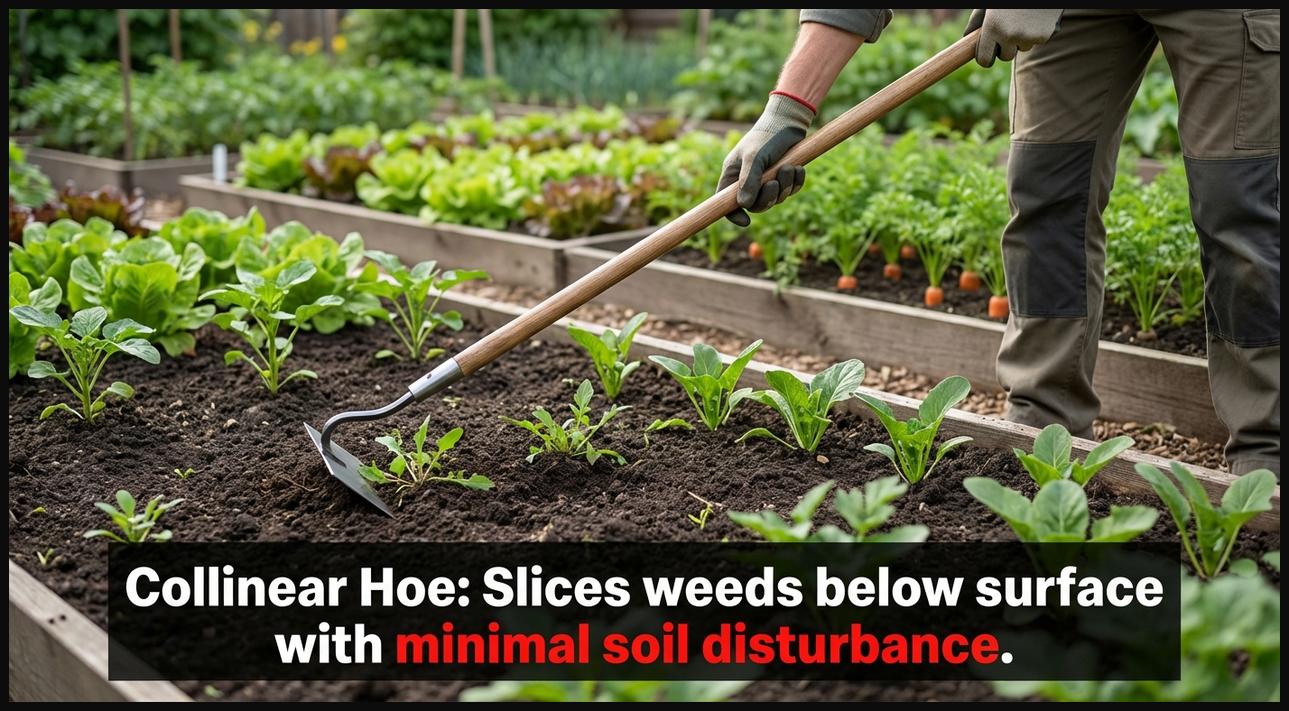
The collinear hoe, a modern innovation, features a thin, exceptionally sharp blade that is offset from the handle, allowing the gardener to weed while standing upright with minimal bending. Its design focuses on slicing weeds just below the soil surface with a push-pull motion, creating clean lines and disturbing the soil very little. This allows for precision weeding.
This tool is particularly effective for managing young weeds in established beds and pathways, offering a swift and efficient method without deep cultivation. In 2026, look for high-carbon steel blades that maintain their edge well and ergonomic handles for comfort. It’s a favorite for gardeners prioritizing finesse and ease of use.
| Feature | Description |
|---|---|
| Primary Use | Surface weeding, slicing young weeds |
| Blade Type | Thin, sharp, offset from handle |
| Best For | Established beds, pathways, light cultivation |
16. The Hand Hoe
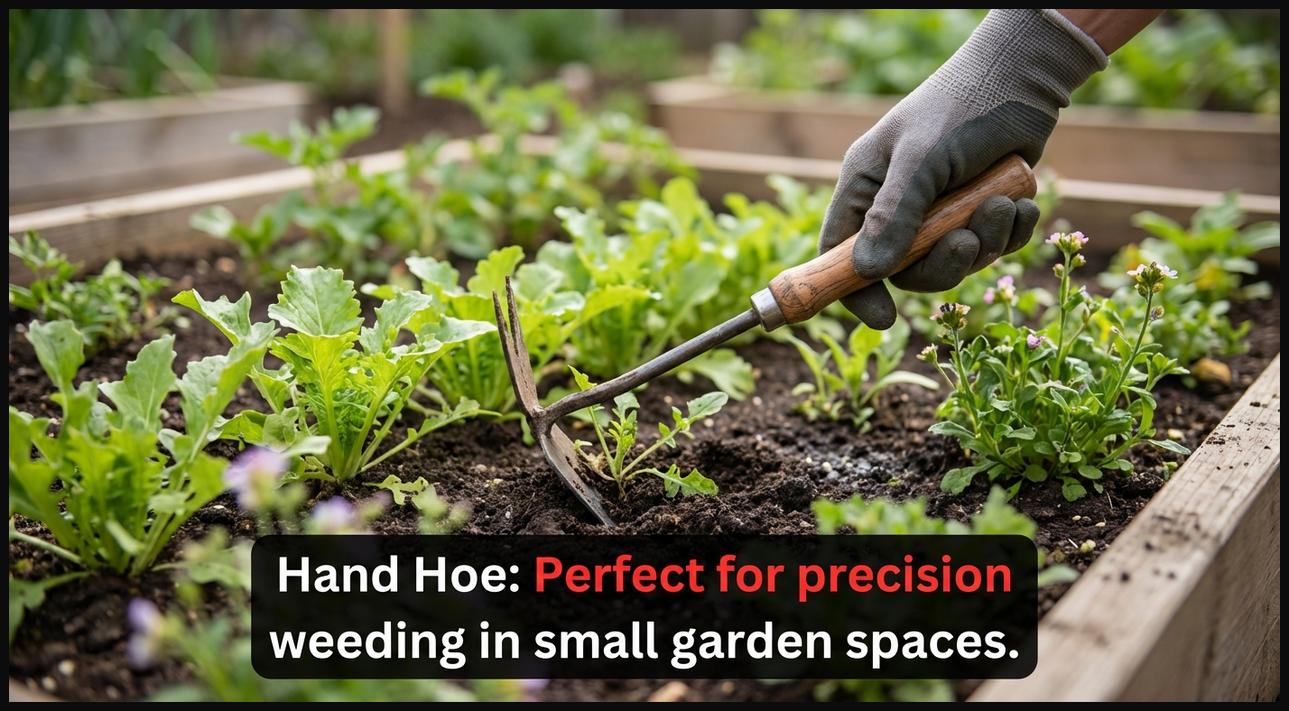
A hand hoe is a small, compact version of traditional hoes, designed for close-up work in garden beds, containers, or raised garden boxes. These smaller garden hoes are perfect for precision weeding around delicate plants, cultivating small areas, and making planting holes with accuracy. They allow for much greater control than long-handled versions.
Often featuring a shorter handle, a hand hoe fits comfortably in one hand, providing direct feedback from the soil. In 2026, many hand hoes combine durable blades with ergonomic grips for comfortable extended use. They are invaluable for intricate tasks and gardeners who prefer to work closer to their plants.
| Feature | Description |
|---|---|
| Primary Use | Precision weeding, cultivating small areas |
| Blade Type | Small, various shapes |
| Best For | Raised beds, containers, delicate plants |
17. The Wheel Hoe
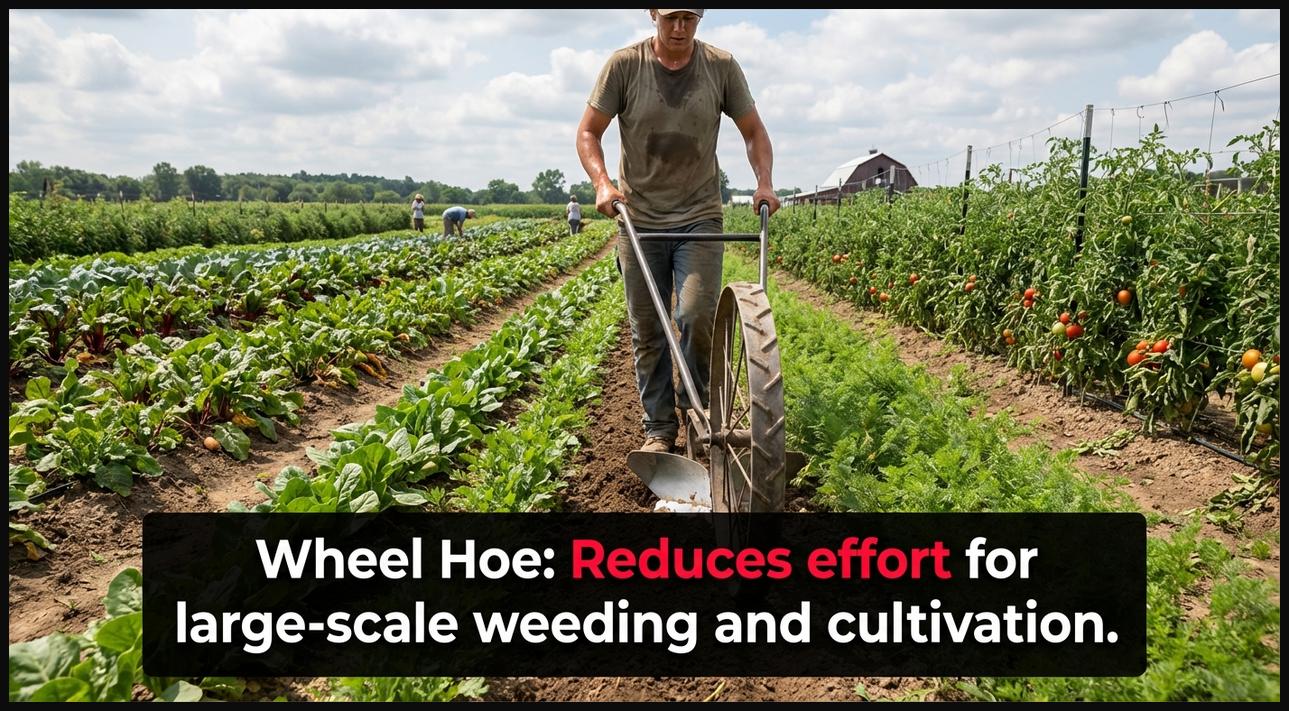
The wheel hoe is a larger, more advanced gardening tool that uses a wheel to allow the gardener to push or pull various attachments, including different types of hoe blades. This system significantly reduces physical effort and increases efficiency for cultivating and weeding larger garden areas. It’s like a mechanical extension of your arm.
It’s an excellent investment for market gardeners or those with extensive vegetable plots, offering a range of interchangeable blades for different tasks. In 2026, modern wheel hoes boast robust frames and smooth-rolling wheels, making them an indispensable tool for productive gardening on a larger scale.
| Feature | Description |
|---|---|
| Primary Use | Large-scale weeding, cultivating, trenching |
| Blade Type | Interchangeable attachments (stirrup, sweep, etc.) |
| Best For | Market gardens, large vegetable plots, efficiency |
18. The Scuffle Hoe (Hula Hoe)
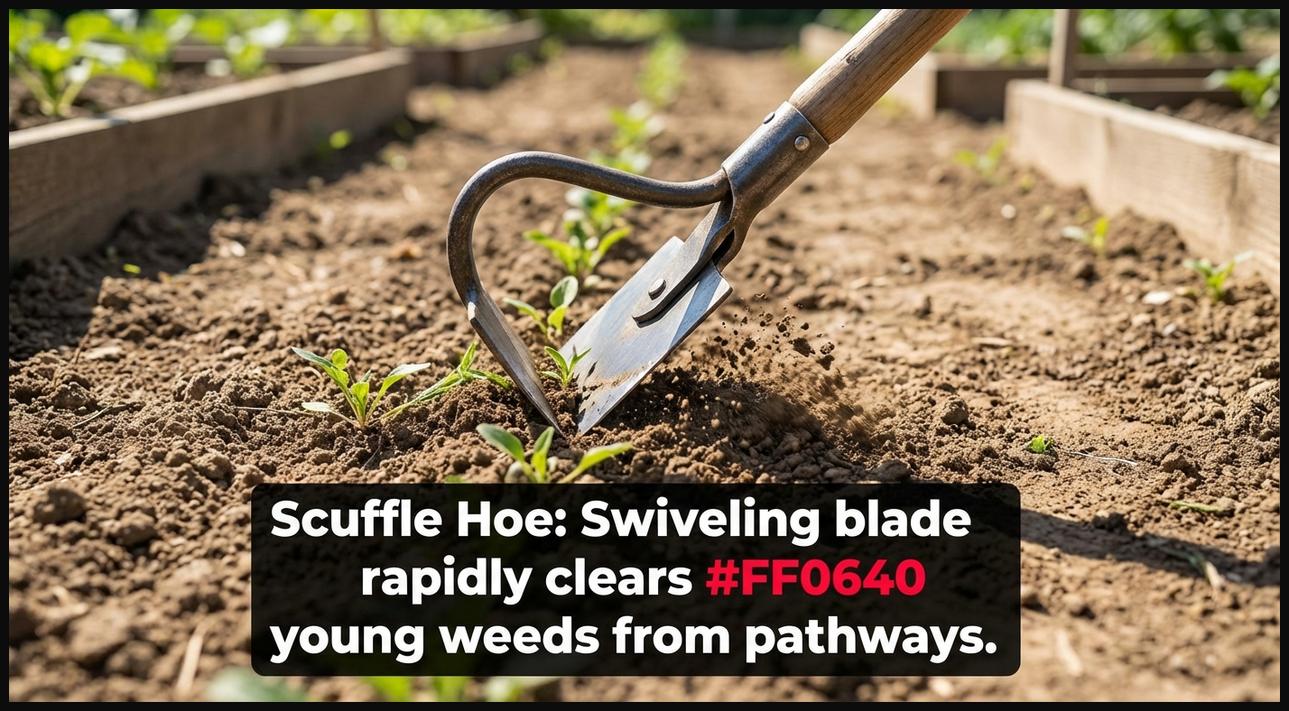
The scuffle hoe, also widely known as a hula hoe, is essentially another name for the oscillating or stirrup hoe, emphasizing its unique action. Its open-sided, sharpened blade swivels or “hulas” as it is pushed and pulled, slicing weeds from both directions just beneath the soil surface. This prevents weeds from regrowing by severing their roots.
This tool is fantastic for quickly covering large areas and dislodging young weeds with minimal effort, leaving a finely cultivated surface. For 2026, look for models with strong, flexible blades and comfortable handles for sustained use. It’s a top choice for maintaining clean garden beds and pathways with less back strain.
| Feature | Description |
|---|---|
| Primary Use | Rapid surface weeding, light cultivation |
| Blade Type | Open-sided, double-edged, pivoting |
| Best For | Large areas, young weeds, minimal soil disturbance |
19. The Standard Garden Hoe (Drawn Hoe)
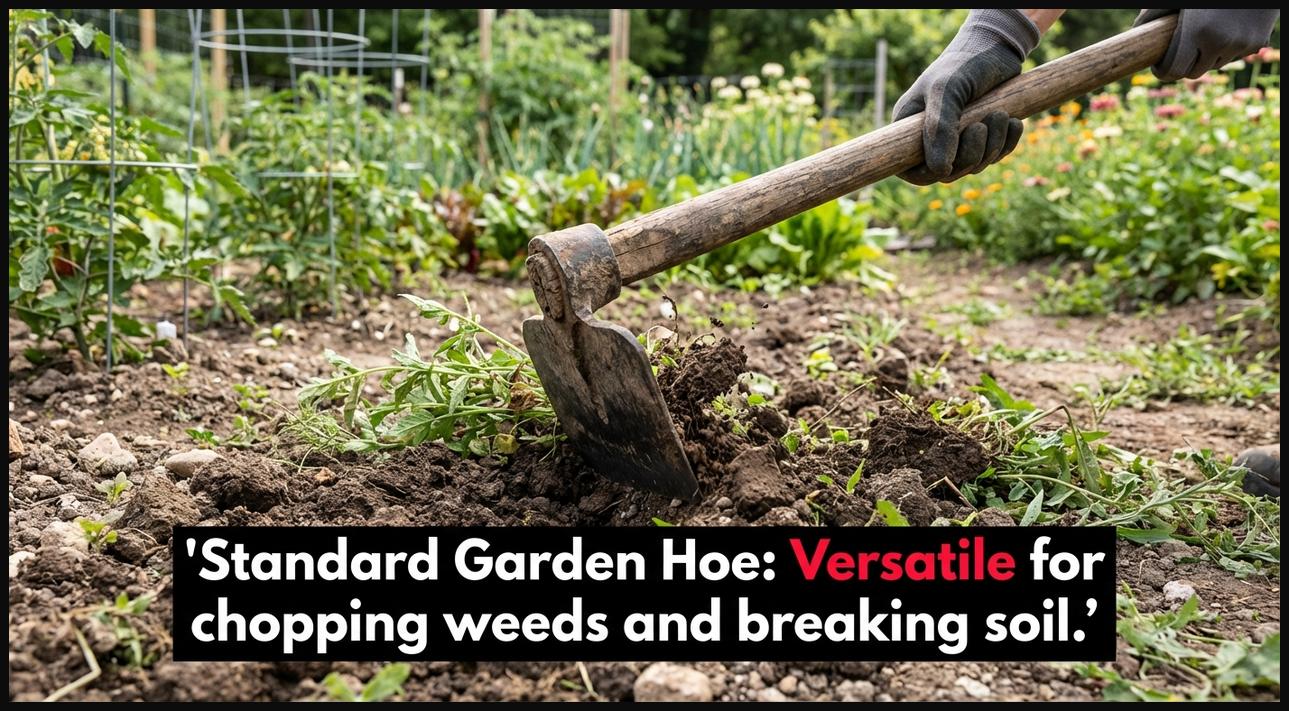
The standard garden hoe, often simply referred to as a drawn hoe, typically features a flat, rectangular blade set at an acute angle to the handle. It’s primarily used for chopping and pulling weeds, breaking up clods of soil, and making trenches for planting. This is the image that most people conjure when they think of a gardening hoe.
Its robust design makes it suitable for heavier tasks and more aggressive weeding, providing significant leverage. In 2026, gardeners appreciate models with strong, forged steel blades that retain their sharpness and sturdy handles for reliable performance. It’s a versatile, all-purpose tool for general garden maintenance.
| Feature | Description |
|---|---|
| Primary Use | Chopping weeds, breaking soil clods, trenching |
| Blade Type | Flat, rectangular, angled |
| Best For | General garden maintenance, heavier tasks |
20. The Short-Handled Hoe

A short-handled hoe is essentially a smaller version of many traditional hoe types, fitted with a shorter handle for close-up, kneeling, or seated work. These are ideal for raised beds, containers, and intricate weeding around delicate plants where a long handle would be cumbersome. They provide more direct control and precision.
While requiring a more hands-on approach, the short handle allows for fine-tuning your movements and accessing tight spots with ease. In 2026, look for durable blades and ergonomic grips that reduce hand fatigue during extended periods of use. They are perfect for detailed tasks in smaller garden settings.
| Feature | Description |
|---|---|
| Primary Use | Precision weeding, cultivating in tight spaces |
| Blade Type | Various, compact |
| Best For | Raised beds, containers, intricate garden work |
21. The Long-Handled Hoe

As the name suggests, the long-handled hoe is designed to allow gardeners to work comfortably while standing upright, minimizing bending and back strain. It comes in various blade types, from draw hoes to Dutch hoes, but its distinguishing feature is the extended handle, typically made of wood or fiberglass. This allows for excellent reach.
This design is particularly beneficial for covering larger areas, working in rows, or for gardeners with mobility challenges. In 2026, look for long handles that are lightweight yet strong, paired with a well-balanced blade for effortless use. It’s an ergonomic choice for sustained work in the garden.
| Feature | Description |
|---|---|
| Primary Use | Weeding, cultivating while standing upright |
| Blade Type | Various, attached to a long handle |
| Best For | Large areas, row crops, ergonomic comfort |
22. The Eye Hoe

The eye hoe, also sometimes called a grubbing hoe, features a large, heavy blade that is typically forged and attached to the handle by an “eye” or socket. This design creates a very strong connection, making it suitable for heavy-duty tasks like breaking up tough soil, digging, and severing thick roots. It is one of the most robust types of garden hoes.
This powerful tool is indispensable for serious garden construction, clearing overgrown areas, or preparing ground where significant soil manipulation is required. For 2026, ensure the blade is made from high-quality carbon steel for maximum durability and edge retention, capable of withstanding harsh conditions.
| Feature | Description |
|---|---|
| Primary Use | Heavy digging, breaking tough soil, clearing |
| Blade Type | Large, heavy, forged, socket-mounted |
| Best For | Heavy-duty garden work, construction, clearing land |
23. The Serrated Hoe

A serrated hoe features a blade with a saw-like edge, designed to cut through tough weeds, small roots, and fibrous plant material with greater ease than a smooth blade. This makes it particularly effective in overgrown areas or for weeds that tend to resist clean cuts. The serrations provide extra cutting power.
This specialized hoe is excellent for tackling areas where you encounter more mature, woody weeds or where a standard sharp edge might snag. In 2026, look for serrated blades made from hardened steel that retain their sharpness despite repeated encounters with tough vegetation. It’s a problem-solver for challenging weeding situations.
| Feature | Description |
|---|---|
| Primary Use | Cutting tough weeds, small roots, fibrous plants |
| Blade Type | Saw-like, serrated edge |
| Best For | Overgrown areas, mature weeds, difficult vegetation |
24. The Digging Hoe
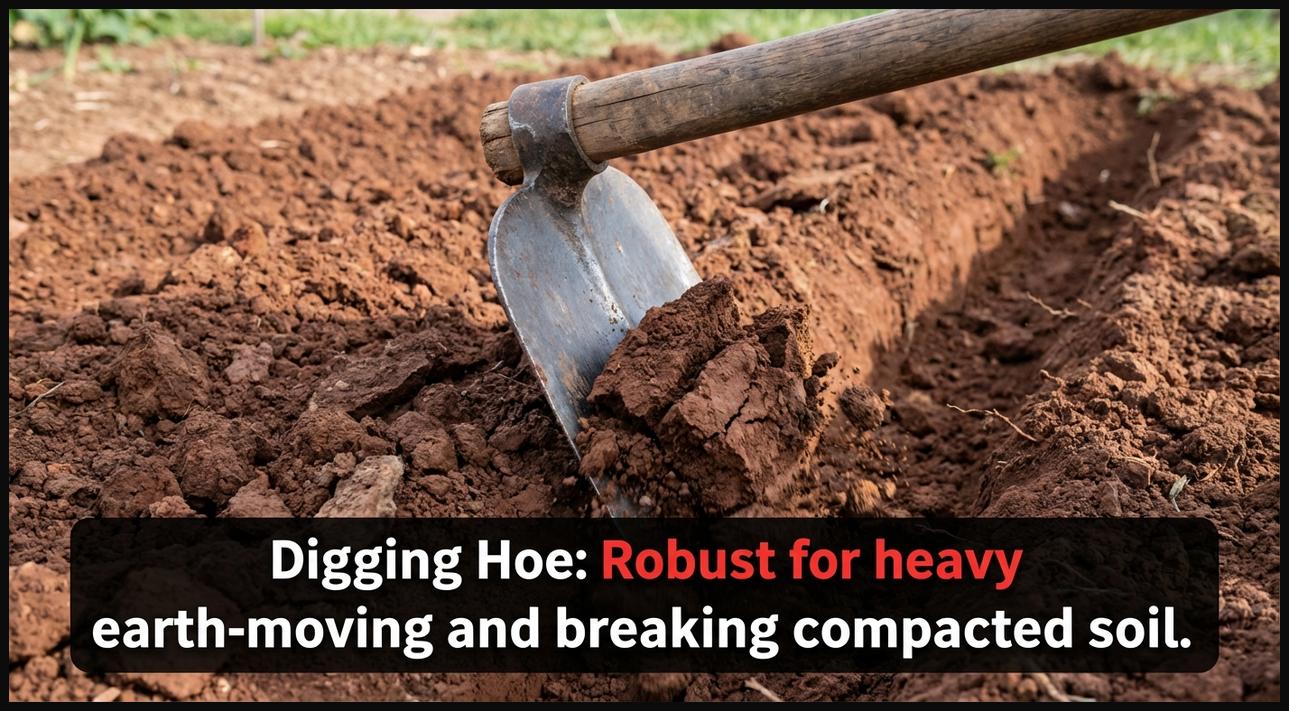
The digging hoe, often similar to a draw hoe or grape hoe, is characterized by its heavier construction and robust blade, specifically designed for serious earth-moving tasks. It excels at breaking up compacted soil, digging trenches for irrigation or planting, and shaping landscape features. Its weight provides momentum for deeper penetration.
This tool is a powerhouse for preparing new garden beds, establishing drainage channels, or undertaking any project that requires significant soil displacement. In 2026, ensure the blade is made from thick, forged steel and securely attached to a strong handle for maximum durability and effectiveness in challenging ground.
| Feature | Description |
|---|---|
| Primary Use | Heavy earth-moving, digging trenches, breaking soil |
| Blade Type | Heavy, robust, often rectangular or curved |
| Best For | New garden beds, drainage, landscape shaping |
25. The Sweeper Hoe
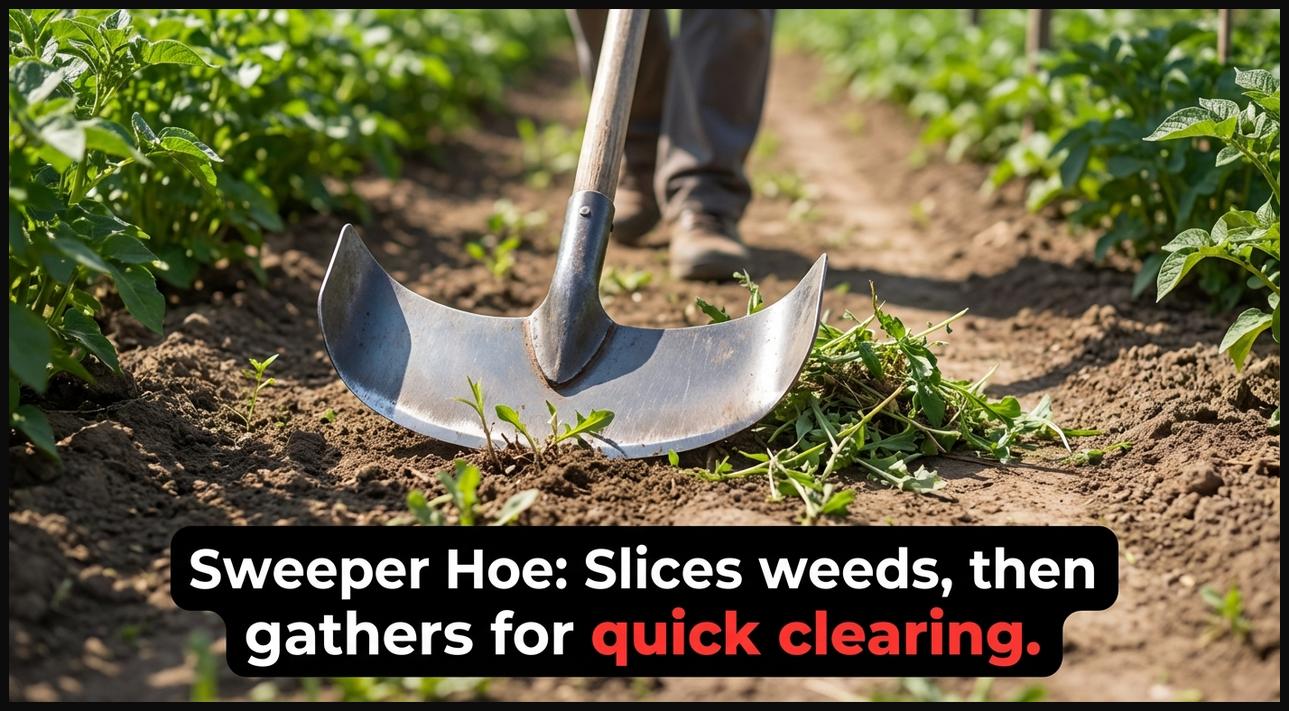
The sweeper hoe, also known as a winged weeder, features a broad, often curved blade with upturned sides, designed to slice weeds at the surface and then gather or “sweep” them into piles. This dual action makes it efficient for clearing large, relatively flat areas and leaving a clean finish. It’s like a hoe and a rake combined for weeding.
This tool is particularly effective for managing young weeds in pathways, driveways, or wide-open garden spaces where deep cultivation isn’t required. In 2026, look for lightweight aluminum or stainless steel blades for ease of movement and rust resistance. It’s a time-saver for maintaining tidy, weed-free surfaces.
| Feature | Description |
|---|---|
| Primary Use | Surface weeding, gathering debris, sweeping |
| Blade Type | Broad, curved with upturned sides |
| Best For | Pathways, large flat areas, quick clearing |
26. The Scraper Hoe

The scraper hoe has a rigid, straight or slightly angled blade that is designed for scraping away moss, algae, and stubborn weeds from hard surfaces like patios, paving stones, or even compacted soil. Its robust, often unsharpened edge is meant for sheer removal rather than slicing or cultivating. This is a tough cleaning tool.
This specialized tool is indispensable for maintaining clean, presentable hardscaping without resorting to harsh chemicals. In 2026, choose a scraper hoe with a heavy-duty steel blade that resists bending and a strong handle for applying firm pressure. It’s a niche tool but incredibly effective for specific cleaning tasks.
| Feature | Description |
|---|---|
| Primary Use | Scraping moss, algae, weeds from hard surfaces |
| Blade Type | Rigid, straight or slightly angled |
| Best For | Patios, paving, driveways, cleaning hard surfaces |
27. The Border Hoe
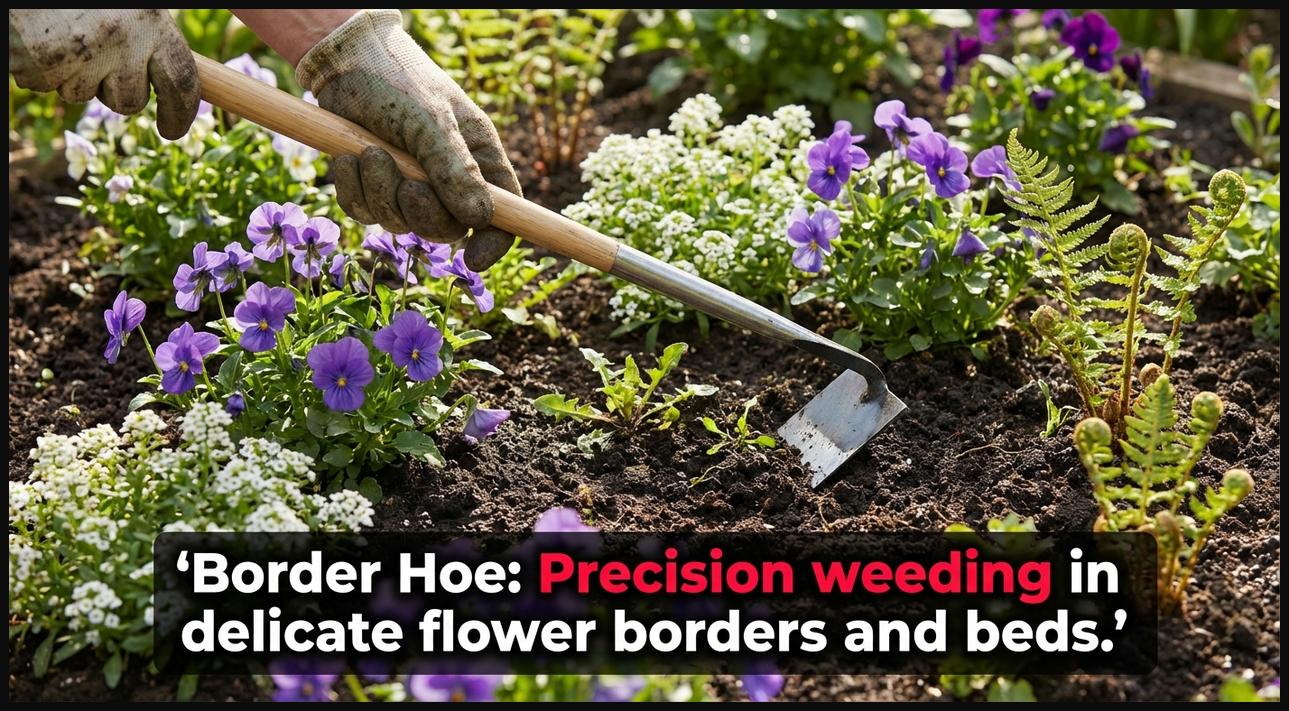
A border hoe is characterized by its smaller, more refined blade compared to standard hoes, making it perfect for intricate work in flower borders and around delicate ornamental plants. Its compact size allows for precise weeding and cultivation in tight spaces, preventing damage to prized garden inhabitants. This is a tool for careful gardening.
This hoe is ideal for gardeners who maintain highly structured or densely planted beds, where accuracy is paramount. In 2026, look for border hoes with lightweight, balanced designs and comfortable handles for extended periods of detailed work without fatigue. It helps maintain the immaculate appearance of your ornamental displays.
| Feature | Description |
|---|---|
| Primary Use | Precision weeding, cultivating in flower borders |
| Blade Type | Small, refined, various shapes |
| Best For | Flower beds, ornamental plants, intricate work |
28. The Push Hoe
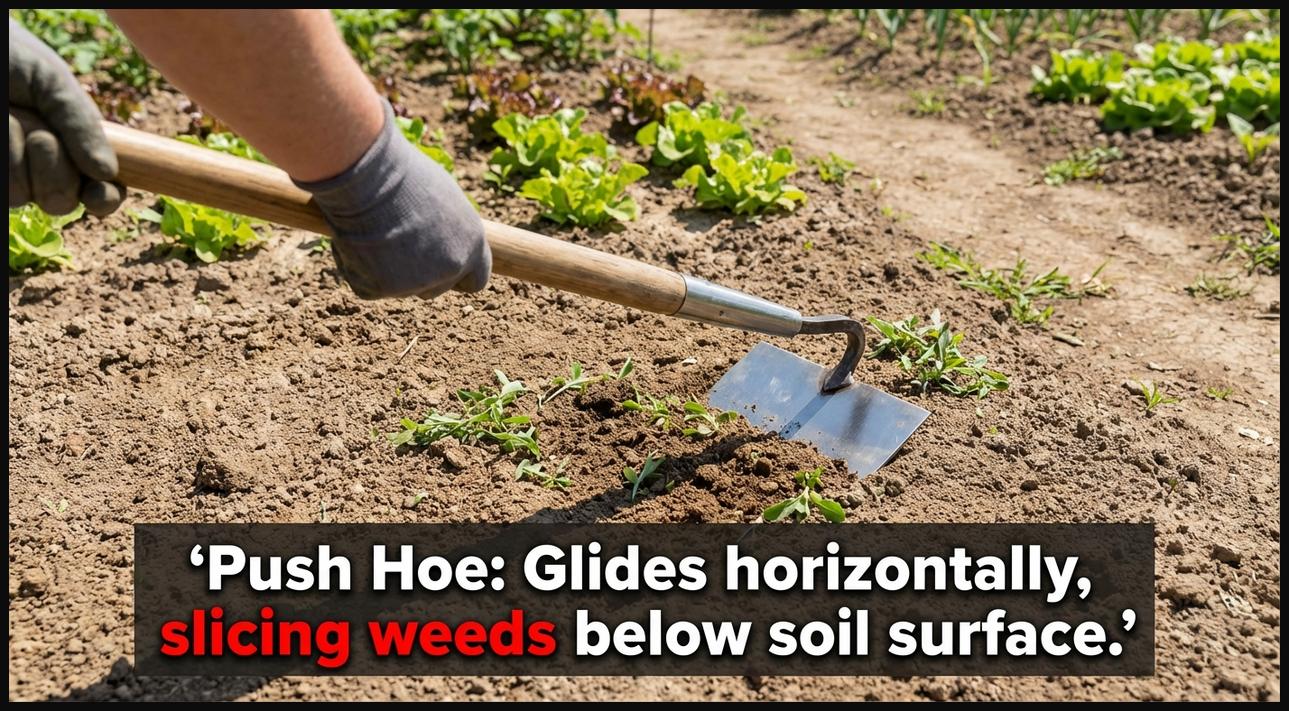
The push hoe, as its name implies, is primarily used with a pushing motion to slice weeds just below the soil surface. Similar to a collinear or Dutch hoe in principle, its blade is designed to glide horizontally through the soil, severing weed roots effectively and leaving the soil surface relatively undisturbed. This action is efficient for maintenance.
This tool is excellent for maintaining pathways and large, open garden spaces where you want to prevent weed establishment without deep cultivation. In 2026, choose models with sharp, durable blades and comfortably angled handles to minimize strain. It’s a quick and easy way to keep your garden looking neat and tidy.
| Feature | Description |
|---|---|
| Primary Use | Surface weeding with a pushing motion |
| Blade Type | Flat, sharp, designed for horizontal slicing |
| Best For | Pathways, open areas, light weed control |
29. The Pull Hoe
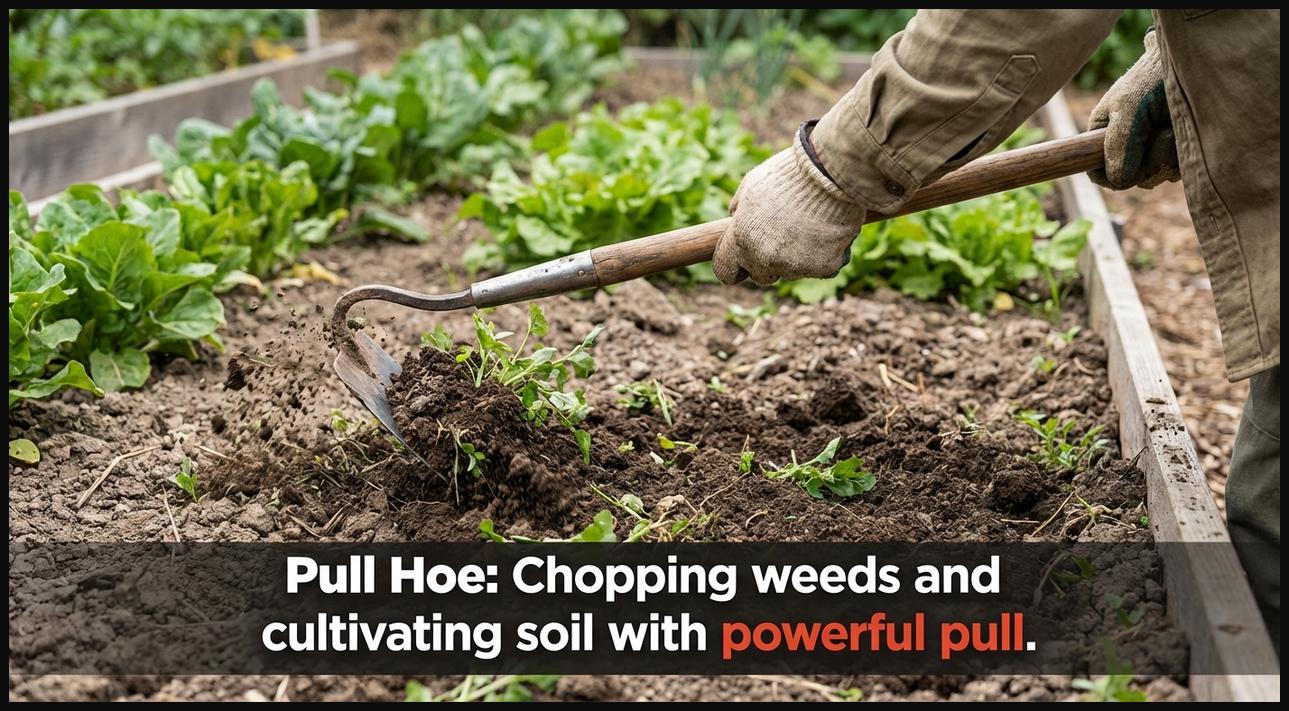
In contrast to the push hoe, the pull hoe is designed for a drawing motion, where the blade is pulled towards the gardener to chop and dislodge weeds. This is characteristic of traditional draw hoes or Warren hoes, which use the force of the pull to penetrate deeper into the soil and move earth. It’s a powerful and direct action.
This type of hoe is highly effective for breaking up compacted soil, creating furrows, and removing more deeply rooted weeds with considerable leverage. When selecting a pull hoe in 2026, prioritize robust blade construction and a strong handle that can withstand significant pulling forces. It’s a fundamental tool for substantial soil work.
| Feature | Description |
|---|---|
| Primary Use | Chopping weeds, breaking soil, creating furrows |
| Blade Type | Various, designed for pulling action |
| Best For | Heavier weeding, soil cultivation, trenching |
30. The Multi-Tool Hoe
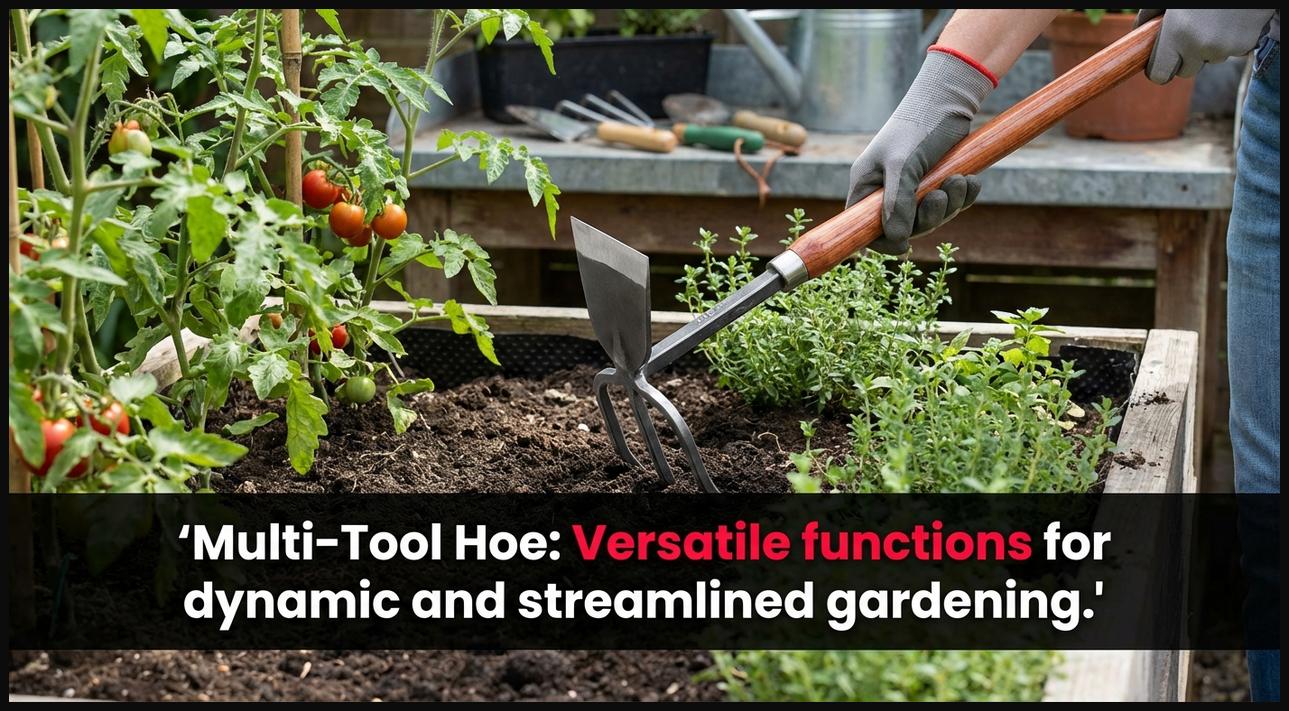
The multi-tool hoe represents a modern approach to gardening, combining several functions into one versatile implement. These innovative types of garden hoes often feature interchangeable heads or a single head with multiple working edges—for example, a sharp hoe edge on one side and small cultivator tines on the other. This maximizes utility and minimizes the need for multiple tools.
Designed for efficiency and adaptability, these hoes are perfect for gardeners who appreciate streamlined toolkits and prefer one implement that can handle various tasks. In 2026, look for durable construction and secure, easy-to-swap attachments for optimal functionality. This is the ultimate versatile tool for the dynamic gardener.
| Feature | Description |
|---|---|
| Primary Use | Versatile weeding, cultivating, various tasks |
| Blade Type | Interchangeable or multi-edged head |
| Best For | Adaptable gardening, streamlined toolkits |
FAQs
What are the primary benefits of using garden hoes?
Garden hoes are invaluable tools for efficient weed control, soil cultivation, and preparing beds for planting. They significantly reduce manual effort compared to hand-weeding, allowing gardeners to cover larger areas more quickly. Regular hoeing helps aerate the soil, improve drainage, and prevent weeds from competing with your desired plants for nutrients, leading to healthier garden growth in 2026.
How do I choose the right garden hoe for my needs?
Choosing the right garden hoe depends on your specific gardening tasks and soil conditions. For light weeding and surface cultivation, a Dutch or oscillating hoe is excellent. For heavier digging and breaking compacted soil, a draw hoe or eye hoe is more suitable. Consider the size of your garden and the type of plants you grow to find the most effective and ergonomic garden hoes.
Can garden hoes be used for more than just weeding?
Absolutely! Many types of garden hoes are incredibly versatile. Warren hoes are perfect for creating furrows for planting seeds, while cultivator hoes can break up compacted soil and aerate beds. Some specialized hoes are designed for tasks like mounding soil around potatoes or precision weeding around delicate crops. Exploring the different types of garden hoes reveals a wide range of uses beyond simple weed removal.
What maintenance do garden hoes require?
To ensure your garden hoes last and perform effectively, proper maintenance is crucial. Always clean off soil and debris after each use to prevent rust and caked-on dirt. Sharpen the blades regularly with a file or sharpening stone to maintain their cutting efficiency. Store your hoes in a dry place to protect them from the elements. Following these steps will keep your tools in top condition for 2026 and beyond.
Conclusion
Selecting the ideal garden hoe can truly transform your gardening experience in 2026, making tasks like weeding, cultivating, and planting more efficient and enjoyable. From the powerful draw hoe for heavy-duty work to the precise Japanese weeding hoe for delicate tasks, there’s a specialized tool to meet every gardener’s need. By understanding the unique features and applications of the various types of garden hoes, you can choose the perfect companion for a thriving and beautiful garden. Invest wisely, maintain your tools, and enjoy the satisfaction of a well-tended outdoor space.

Related Posts

Top 30 Garden Sprayers

Top 30 Hand Garden Tools
